Why a Quiet Voice Can Still Lead a Scene
Why a quiet voice can still lead a scene: learn how pauses, contrast and sound placement keep soft dialogue clear without simply turning it up.

Why a quiet voice can still lead a scene is a question that often comes up when a character speaks softly but the moment remains easy to follow. The answer is not always to make the voice louder: a pause, a change in background sound or a clear place in the mix can give a line room to register.
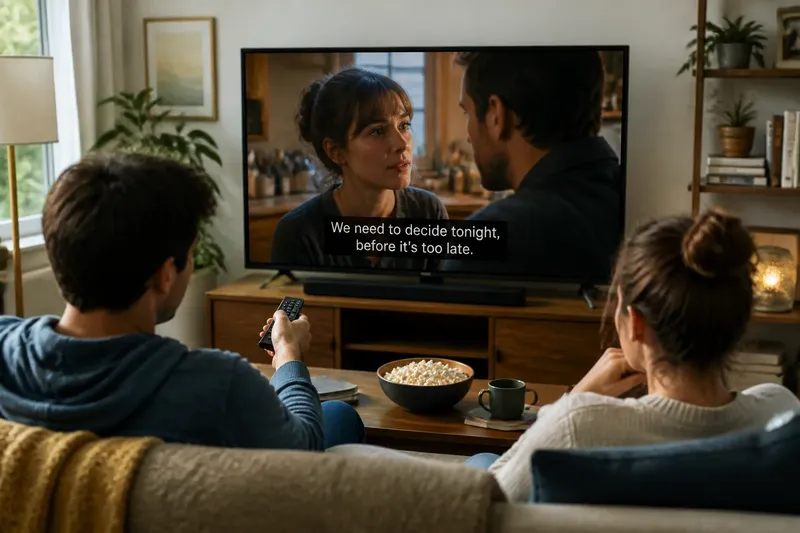
For viewers, the useful distinction is between a quiet performance and a hard-to-hear one. A restrained voice may be an intentional part of the scene; dialogue that disappears beneath music or effects may be an intelligibility problem. What fits depends on the room, the listening setup and what the scene asks you to notice.
Choose your response by the listening situation
Before changing a setting, identify what is getting in the way. Is the line soft but distinct, or are its words masked? Does the problem occur throughout the film, or only during a busy scene? These clues point to different responses.
- If the voice is quiet but distinct: leave the mix alone at first. The performance may rely on restraint, and raising the overall level can make surrounding sounds unnecessarily forceful.
- If music or effects cover the words: try a dialogue-focused audio option, if the film or playback system offers one. This may adjust the balance without treating every sound as equally quiet.
- If voices are hard to follow across the film: check the chosen audio track and device output. A mix intended for several speakers can behave differently through television speakers or headphones.
- If only one viewing position causes trouble: move closer to the television or adjust the listening position before changing the film’s sound. A blocked speaker or a distant seat can soften detail.
- If the line is deliberately murmured: accept some uncertainty when the scene supports it through expression, timing or reaction. Not every quiet line is meant to land like a clear announcement.
These are starting points, not rules for every film. A sound option may alter more than dialogue, and the appropriate choice depends on the available track and equipment instructions.
Contrast gives a soft line room to register
A quiet voice can stand out because the sounds around it recede. A score may thin, a mechanical hum may stop, or another character may fall silent. The line’s level has not necessarily changed; the scene has changed its surroundings so attention can settle on it.
Listen for the transition into the line. If a noisy passage gives way to a brief hush, that change acts like punctuation. The ear can pick out a soft voice more readily when it is not competing with a dense layer of sound. By contrast, a line spoken over traffic, music and sharp effects may remain difficult even if its level seems substantial.
This is why turning everything up is not automatically the clearest choice. It raises the background along with the voice, and the relative contrast may stay much the same. If louder playback makes the scene tiring but does not make the words easier to distinguish, return to a comfortable level and look for a dialogue or dynamic-range setting instead.
Pauses help listeners separate words and intentions
A pause can make a soft line easier to follow by separating it from the next sound. It can also shape meaning: a hesitation before a reply may suggest doubt, while a pause after a statement can leave the other character’s reaction in focus. The silence is part of the performance, not empty space that needs filling.
In a crowded scene, a short gap between phrases gives the listener time to recognise a word before the next sound arrives. Editing can support this by holding on a face or delaying a response. If the speech seems mumbled, notice whether the scene is asking you to understand every word or to register the emotional turn. The surrounding action often makes that distinction clear.
For a simple comparison, imagine a character speaking quietly in a kitchen while a kettle whistles. If the whistle ends just before the character’s last phrase, that phrase may become clear without any increase in vocal level. If the whistle continues through the line, a dialogue setting or a quieter playback environment may help more than raising the master volume.
Sound placement can make a voice easier to locate
Placement tells you where a voice sits among other sounds. In a surround mix, dialogue may feel anchored near the screen while movement or atmosphere spreads around it. On a television or a pair of headphones, the same scene may be rendered differently, especially if the device is set to an output mode that does not match the connected equipment.
When a voice feels distant or oddly placed, check whether the selected track matches your setup: for example, a stereo option for two speakers or a suitable headphone mode when using headphones. The names and options vary by service and device. A mismatch can affect balance and location, so try another available track before making repeated volume changes.
Placement also carries dramatic meaning. A voice heard from another room may be soft because the character is physically distant; a close, low voice may feel intimate or guarded. If the sound matches the space shown on screen, its quietness may be deliberate rather than a flaw.
Which adjustment fits a quiet dialogue scene?
Should I turn the volume up for a soft voice?
Try a modest adjustment only if the whole scene is too quiet at a comfortable listening level. If other sounds become intrusive while the words remain unclear, lower the level and try a dialogue-focused or night mode instead.
Why is dialogue harder to hear when music starts?
Music can mask speech by occupying some of the same listening space, even when the dialogue itself has not changed. A quieter music balance or a dialogue-enhancement option may help, if your film or device provides one.
Is a whispered line supposed to be unclear?
Sometimes the performance is intentionally restrained, but the scene should still give you cues about its meaning through delivery, expression, reaction or context. If the sound is simply buried by other audio, that is a different problem from a deliberate whisper.
Why does dialogue sound different through headphones?
Headphones present the mix differently from room speakers, and an output mode meant for another speaker arrangement may alter the result. Check the playback device’s audio mode and compare the available track options at a comfortable level.
Spend effort on the mix, not maximum volume
When a quiet line causes trouble, make one change at a time: check the track, try a dialogue option, or improve the listening position. Then return to the same scene and listen for whether the words are more distinct, not simply louder. If the scene remains clear enough to follow, there is little benefit in chasing every syllable.
What is not worth the effort is repeatedly raising and lowering the volume during each exchange. That can distract from the performance and make the sound around the dialogue more demanding. A steady, comfortable level and a suitable mix are usually a better fit for following a soft-spoken scene.
Keep the central question simple: does the voice disappear, or does it remain quiet while the scene still makes sense? That distinction helps you choose the right response—and lets a deliberately restrained performance stay restrained.