Before Dialogue Took the Lead: How Silent Films Made Meaning Visible
Silent film storytelling uses gesture, intertitles and visual action to make motives and plot legible, even when no spoken dialogue is heard.
How does a film make you understand a character’s fear, a sudden change of plan or a joke without spoken lines? Silent film storytelling answers through gesture, intertitles and visible action, giving the audience clues to read as events unfold. Imagine a viewer who keeps looking down at a phone during a silent film and then wonders why the next scene feels confusing. The problem may not be the film’s age; it may be that its most important lines are being delivered in pictures.
To see how that works, follow one invented viewing situation from confusion to clarity. The film in this example is fictional, as is the small detective story at its centre. The useful question is not whether every gesture has one fixed meaning, but how several kinds of visual evidence work together to guide attention.
Begin with a story told through objects and movement
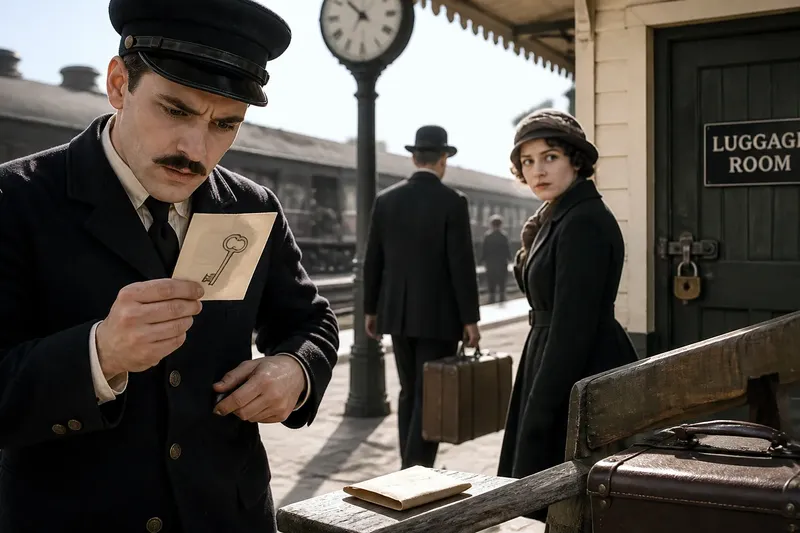
Imagine a silent comedy about a station porter who finds a small envelope on a bench. He opens it, sees a drawing of a key, and looks towards a locked luggage room. A woman across the platform notices him. She looks at the envelope, then at a second figure arriving with a suitcase. The porter slips the envelope into his pocket and walks towards the luggage room.
A viewer glancing at the screen might register a man, a woman and a suitcase, but miss the chain of cause and effect. The envelope is not merely decoration: the drawing links the porter to the locked room. The woman’s eye-line directs attention from the envelope to the newcomer. The porter’s movement then turns that connection into an action. Each detail gives the next one a place in the story.
This kind of visual storytelling asks the viewer to watch relationships, not just faces. Who looks at whom? What object changes hands? Does a character approach, retreat, hide or wait? Those are simple questions, but they can reveal motives before a title card states them.
Read gestures as choices, not a universal code
Gesture can show a character’s intention, but it is not a dictionary in which one movement always has the same translation. A raised hand might be a greeting, a warning or an attempt to stop someone. Its meaning depends on what happened just before, where the character is looking and how another person responds.
In the imagined station film, the woman points towards the luggage room. If the porter then looks at the room and moves away from it, the gesture may be a warning. If he follows her finger and reaches for the door, it may be an instruction. The next action helps settle the meaning. A viewer does not have to decode every movement on its own; the scene supplies context through response and consequence.
Faces can carry the same kind of information. A glance towards the exit, followed by a stiffened posture, can suggest that a character has heard or noticed something alarming. A smile that disappears when another person turns away can hint at concealment. These cues are most useful when they sit alongside an object, a location or an action that makes the stakes understandable.
Broad gestures are common in silent-era performance because they had to read clearly across a theatre and through the visual style of the time. That does not mean every performer used the same manner, or that every scene should be read as exaggerated pantomime. Watch for the individual pattern: a character who repeatedly checks a pocket may be guarding something, while another who keeps turning towards a companion may be waiting for a signal.
Use intertitles as punctuation in the visual argument
Intertitles are printed cards inserted between shots. They can carry spoken words, establish a time or place, explain a necessary fact, or add a thought that images alone would leave uncertain. They are not a failure of visual storytelling. Used alongside action, they can sharpen a scene by giving the viewer only the information that cannot be shown clearly.
Suppose the porter opens the envelope and the next card reads, “The key is already inside.” The card changes the meaning of what follows: he need not search for the key, but must decide whether to retrieve it. If he then looks towards the woman before entering the room, the title and glance together suggest hesitation. The written words supply a fact; the performance supplies the emotional response.
Intertitles also control pace. A card can interrupt a rush of images, let a joke land or mark a change in time. When a film uses many cards, notice whether they explain actions already visible or add information the image cannot convey. Repeated explanation may slow the scene, while a concise title can prevent a genuine ambiguity from becoming a guessing game.
On a modern screen, titles may be small or displayed briefly. If you miss one, pause or replay that moment if the player allows it; do not assume the plot has become incoherent. The card may contain the link between one action and the next.
Let editing connect what the image cannot hold at once
Silent storytelling is not confined to what appears within a single shot. Editing can place two images beside each other so that one changes how the other is understood. A character looks off-screen; the film cuts to a door moving in the wind. The door may be the thing that caught the character’s attention. A cut from a guarded face to a hidden object can imply a connection without spelling it out.
In the fictional station story, the porter enters the luggage room, and the film cuts to the woman watching from the platform. It then cuts to the suitcase left beside the bench. The sequence invites the viewer to connect the woman, the porter’s errand and the unattended case. The images do not have to show all three at once. Their order makes the relationship legible.
A cut can also withhold information. If the film shows a hand reaching towards the envelope, then cuts away before the hand takes it, the viewer may wonder who has it now. That uncertainty can be deliberate, but it should still be anchored by details that make the question clear. Look for the last known location of an object, the direction a character was facing and the action that the cut interrupted.
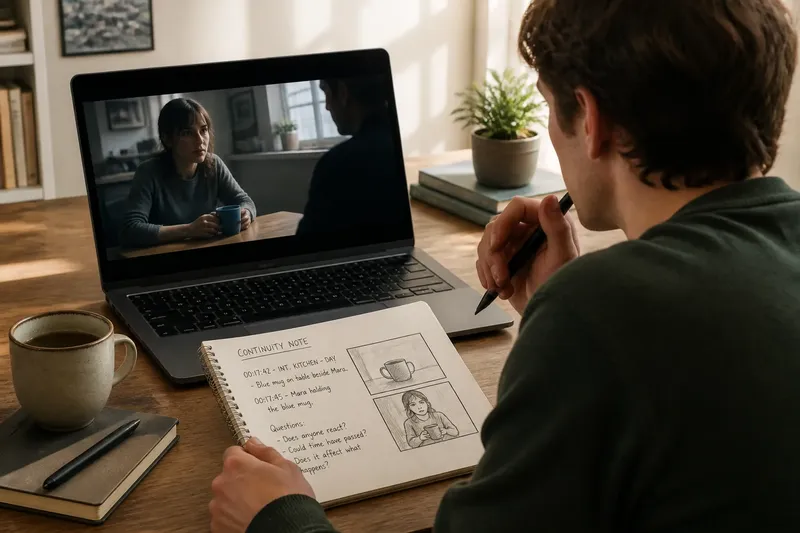
When a scene becomes hard to follow, identify the last action you understood before replaying the entire sequence. The difficulty may come from a missed look or object rather than from a complicated plot. This is a useful distinction: the first asks you to catch a visual link; the second asks you to revise your understanding of what the characters want.
Keep the screen and the room from hiding the clues
The film’s visual information can be easy to miss if the screen is small, reflections wash out a dark shot or movement on another device competes for attention. Silent films often place meaning in a brief glance or a prop held near the edge of the frame. A comfortable, steady view helps those details register.
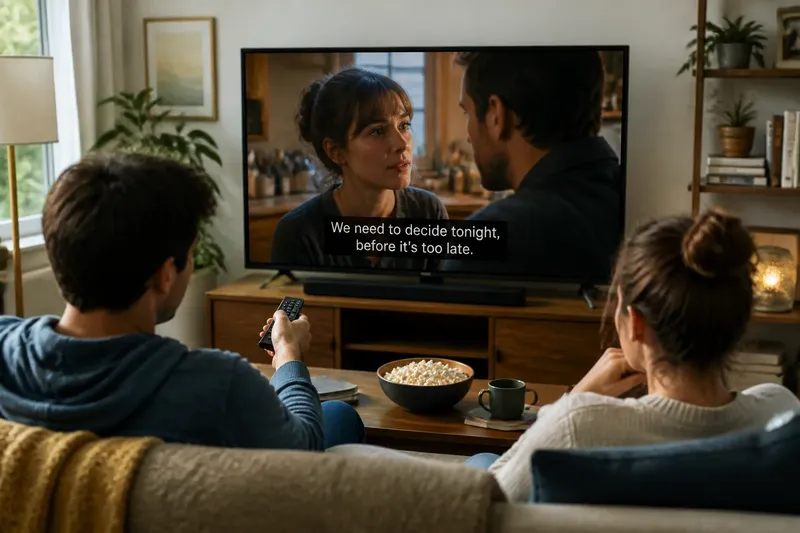
Before starting, choose a screen where faces and title cards are readable, reduce distracting reflections and set the brightness so shadows remain visible without flattening the whole image. If you are watching with other people, agree whether to pause for an intertitle rather than talking over it. A soundtrack or musical accompaniment can set mood, but it does not replace the visual information carrying the plot.
It is not worth trying to identify a hidden symbol in every prop or treating every look as a coded message. Start with what the scene plainly shows: a person, an object, a direction of travel and a response. If those details do not support a more elaborate theory, leave it aside.
What should you watch for in a silent film?
Do silent films have dialogue?
Many use intertitles to present words a character might have said, while other stretches rely on gesture and action alone. The balance varies by film, so a title card is part of the storytelling rather than an interruption outside it.
How can you tell what a character wants?
Track what the character looks at, approaches, avoids or tries to keep from others. Then watch the response from the people nearby; their reactions can confirm or complicate the first impression.
Why do intertitles appear between scenes?
They can provide speech, establish a change in place or time, or supply a fact that would be awkward to show. Their position also affects rhythm, giving a viewer a moment to absorb a turn in the action.
What should you do if the plot stops making sense?
Return to the last action you followed and check the title card, important props and characters’ eye-lines around the next cut. Replaying a short passage can reveal a missing link without requiring you to invent an explanation.
Finish the station story by following the evidence
Return to the invented film. The porter carries the envelope into the luggage room. The woman stays on the platform and watches the newcomer leave the suitcase behind. An intertitle says, “The owner is waiting at the other entrance.” The porter looks from the envelope to the locked door, then back towards the platform; he has learnt that the key is inside, but now suspects the suitcase belongs to someone else.
He turns away from the room and runs towards the exit. The woman points after him, then picks up the suitcase. In a final shot, the newcomer looks back and sees her holding it. Even without spoken lines, the viewer can follow the shift: the porter has abandoned one task, the woman has acted on what she saw, and the newcomer has been connected to the case.
That is the practical lesson of silent film storytelling: meaning travels through linked evidence. A gesture establishes a choice, an intertitle supplies a needed fact, and editing connects actions across space. If you keep track of who notices what and what changes hands, a film without audible dialogue can still make its motives and plot remarkably clear.