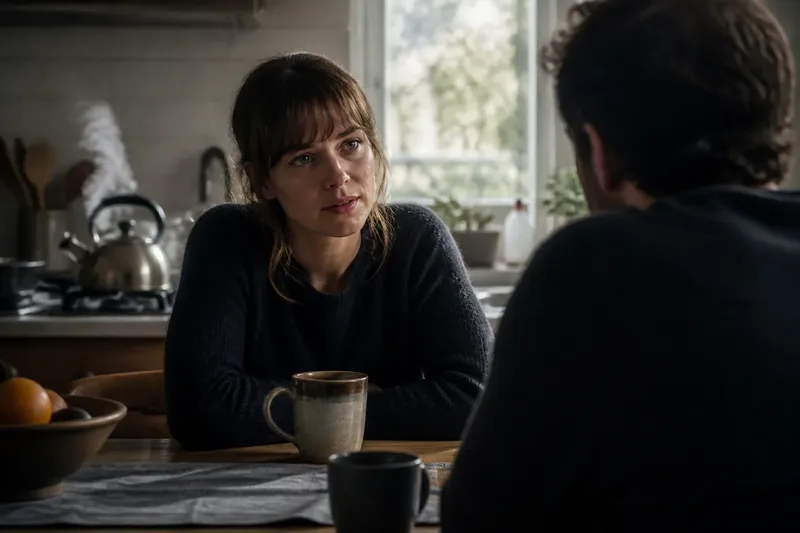
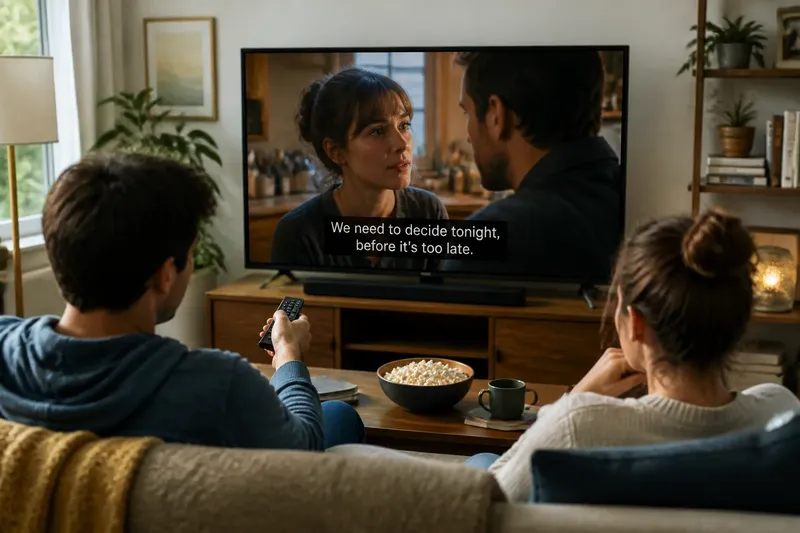
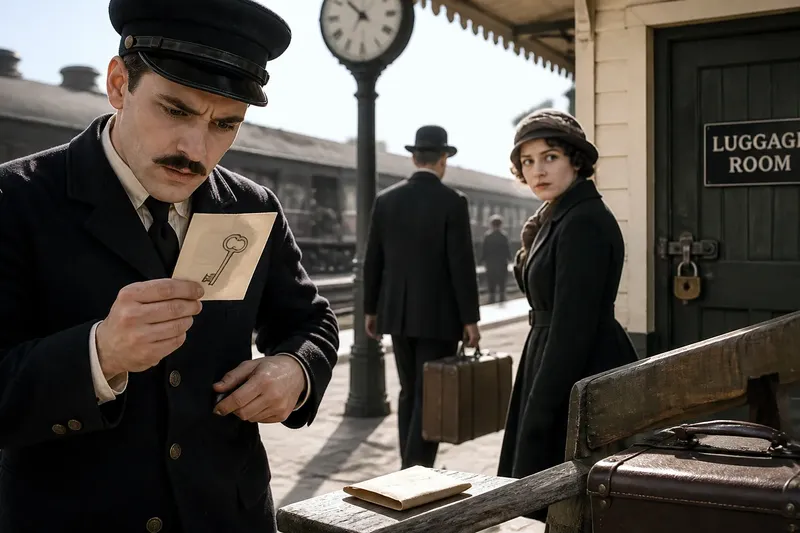
A Rainy Afternoon, One Scene, Three Watches
Use this one-scene editing exercise to spot cut points, changes in shot distance and the way a final viewing reveals a scene’s pace.
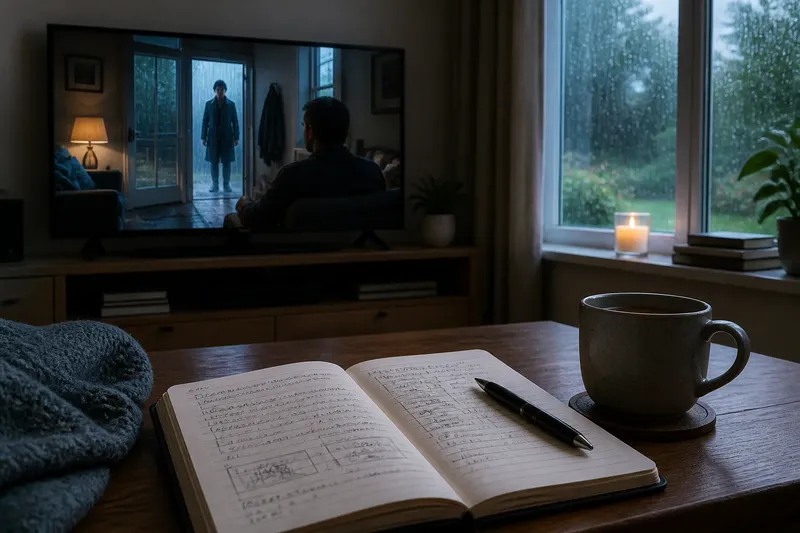
How do you notice a film’s editing without pausing every few seconds? Choose one self-contained scene and watch it three times, with a different question in mind each time. This one-scene editing exercise starts with the cut points, moves to shot distance, then asks how the finished sequence controls pace.
A rainy afternoon suits the exercise: settle somewhere comfortable, pick a scene that runs for a few minutes, and keep a notebook or the Notes app nearby. A conversation, a search through a room or a character waiting for someone can all work. Choose a scene with a clear beginning and ending, and avoid one so familiar that you already anticipate every cut.
What scene should I choose for this editing exercise?
Choose a scene whose action you can follow without needing to rewind for plot. The aim is to notice how the shots are arranged, not to solve the story or identify every visual detail. A scene with two people talking may offer changes of speaker, reactions and pauses; a scene without dialogue can reveal how movement and waiting are shaped.
Use the version of the film you normally watch, whether that is a disc, a streaming service or a file you own. Keep the screen and sound at a comfortable setting, and leave playback speed, captions and any “enhancement” controls alone for now. Changing the presentation between watches makes it harder to compare what you noticed.
Give yourself a simple boundary: start when the scene’s main action begins and stop when it clearly shifts to another place, time or activity. If the boundary is uncertain, choose a short stretch with a distinct event, such as someone entering and sitting down. You do not need to make a perfect selection; a manageable scene is more useful than a long sequence you cannot hold in mind.
Where do the cuts happen in the first watch?
On the first watch, follow the action and mark each visible cut as it happens. Do not try to name the editing technique yet. A short tally beside broad moments is enough: “door opens—cut”, “listener looks up—cut”, “room shown—cut”.
A cut usually changes the image from one shot to another, though a gradual fade or dissolve may also mark a transition. Concentrate on the change itself rather than deciding whether it is “good” or “bad”. If the film moves the camera within an uninterrupted shot, do not count that movement as a cut.
It can help to note what the image changes to:
- Another character, especially the person listening.
- A wider view that establishes where everyone is.
- An object or detail connected to the action.
- A different position or angle on the same person.
- A new location or a clear passage of time.
These labels are prompts, not a grading system. A single cut may do more than one job, and there is no need to settle on one explanation immediately. If you lose track, keep watching and mark the next change you catch; rewinding can wait until the three watches are complete.
Say you choose a scene in which a guest arrives during a storm. On this first pass, you might jot that the film cuts from the guest at the doorway to the host’s face, then to a wider view as the guest comes inside. That record gives you something concrete to compare with the next pass without claiming that those choices have one fixed meaning.
How does shot distance change across the scene?
On the second watch, ignore your earlier tally and follow the distance between the camera and the subject. Is the image wide enough to show the room, close enough to frame a person from the chest up, or tight enough to isolate a face or hand? You do not need formal shot names; use descriptions that make sense to you.
Notice when the film changes distance and what remains visible. A wider image can keep several people and their positions in view. A closer image can make a glance, hesitation or small action easier to register, while leaving the surrounding space less prominent. These are possibilities, not fixed meanings: context and performance still matter.
Record a few transitions rather than every shot. For instance, note “wide room to close face” or “close face back to two people”. Then ask what information becomes clearer or less available after the change. Does the new framing direct attention to a response, bring an object into view, or restore the relationship between characters and their surroundings?
Also watch for distance that stays the same. A scene can cut between different speakers while keeping a similar framing, or hold a wide composition while people move within it. Those choices can make the exchange feel balanced, keep the room present in the viewer’s mind, or simply allow the action to play out without a new visual emphasis. Describe what you see first; let interpretation follow.
How do I watch the scene a third time for pace?
On the final watch, put the notes aside and follow the scene’s pace from start to finish. Notice whether the images change quickly or linger, where movement gathers, and where a pause gives you time to register a look or a piece of information. Pace is not just speed: a quiet stretch can feel tense, while a busy exchange can seem unhurried if its shots leave room to take everything in.
Now connect that impression to the cut points and distances you noticed earlier. A quick succession of close views may make a response feel urgent, but the same sequence can have a different effect if the characters are calm or the scene’s action is routine. A long-held wide shot may slow the rhythm, or make a change within the frame feel more noticeable. Ask what the sequence seems to invite you to attend to, rather than trying to assign a single emotion to every cut.
Use the whole scene as your reference. Does it begin with room to look around and become more tightly cut as a decision approaches? Does it hold on a conversation, then break the rhythm with a sudden image change? Does the ending accelerate, or does it let the last reaction remain on screen? Your answer can be as plain as “the pauses shorten near the door” or “the final look lasts longer than the earlier ones”.
In the invented rainy-day scene, imagine that the host first watches the guest from across the room, then the film cuts more closely as the guest mentions a missing key. If the final shot holds on the host’s hand near a drawer, you might observe that the sequence moves from a broad arrival to a more focused ending. That is a description of the viewing experience, not proof of what the host intends; the rest of the film may change how the moment reads.
What should I write down after the three watches?
Keep a short record that separates observation from interpretation. One column can hold what happened on screen; another can hold what you think the choice does. This distinction helps you revise your reading if later scenes supply new information.
- Cut point: Note the action or look that occurs just before the image changes.
- New image: Describe whether the cut shows a person, detail, wider space or another place.
- Distance: Record whether the new shot feels wider, closer or similar in framing.
- Rhythm: Mark a stretch that feels brisk, steady or held, and say what makes it feel that way.
- Possible effect: Write a tentative thought, such as “this brings the listener’s reaction forward”.
Keep the language modest. “The cut follows the glance” is directly observable; “the editor wants us to distrust the character” is a larger claim that may need evidence elsewhere in the film. If you keep both, label the second as a possibility rather than a fact.
There is no need to estimate exact shot lengths or turn the notes into a technical report. A few specific observations will tell you more than a page of vague reactions. It is not worth the effort to name every shot size precisely, memorise editing terminology or pause after each cut; those tasks can interrupt the rhythm you are trying to understand.
What if I cannot tell whether a change is a cut?
If the image changes gradually, treat it as a transition rather than forcing it into the category of a straight cut. A dissolve blends one image into another, while a fade moves towards or away from a blank image. You can simply write “gradual transition” and notice where it occurs in the scene.
If the camera moves but the view remains continuous, describe it as a camera movement, not a cut. A slow pan across a room can redirect attention without changing shots. When a move leads into a new image, mark the point where the view changes and keep your description neutral.
Should I rewind or watch at a slower speed?
Try one uninterrupted pass before rewinding. Watching at normal speed preserves the timing between cuts, reactions and pauses, which is exactly what the third viewing is meant to reveal.
If a brief transition remains unclear, replay only that moment after the exercise and add a note. Slowing playback can make a visual change easier to inspect, but it can also alter your sense of rhythm, so do not use a slowed version to judge the finished scene’s pace.
What if the scene feels different on the last watch?
That is useful information. Your first watch follows the sequence as a whole; the next two direct your attention towards particular features, so your final impression may change as those features become easier to notice.
Separate the scene’s observable pattern from your reaction to it. You might write, “the final image holds after several quicker changes; I read that pause as uneasy”. The first clause records a pattern; the second reports an interpretation that you can compare with what follows in the film.
How can I use this editing exercise on another film?
Keep the same three questions, but choose a different kind of scene. A quiet exchange can make reaction shots and held pauses easy to follow; a character crossing a room may reveal how cuts preserve or interrupt movement. Avoid comparing scenes as if one must be more skilful. Ask instead what each arrangement makes easy to see, and what it asks you to infer.
The main search phrase, one-scene editing exercise, is useful because the method stays deliberately small: one bounded scene, three distinct passes, and notes that separate what happens from what it might mean. Try it with a scene you can replay comfortably, then return to the film without stopping. The next time a cut catches your attention, you will have a clearer way to describe what changed and how that change shaped the moment.